Your Needle Is Lying to You: The Hidden Cost of a Badly Calibrated Turntable
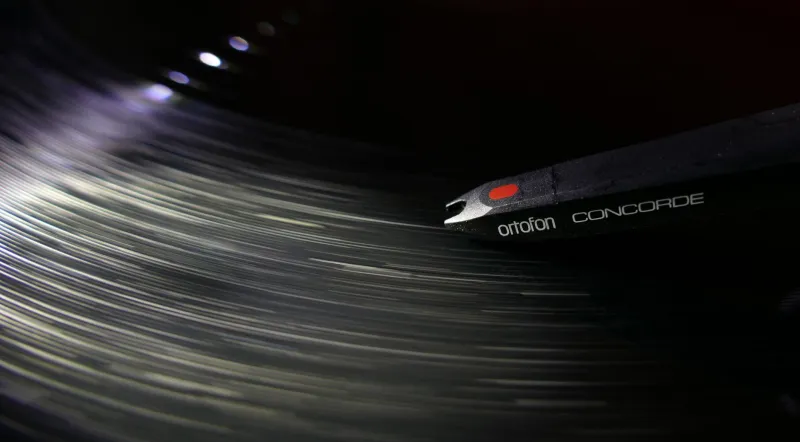
You spent forty bucks on a clean original pressing. You wiped it down, sleeved it right, stored it upright. You did everything the internet told you to do. And then you dropped the needle on it — the same needle, on the same turntable, with the same setup you've been running for the last three years without touching a single thing.
Here's the uncomfortable truth: that might be the most destructive thing you've done to it.
Tracking force — the downward pressure your stylus exerts on the groove — is one of those technical details that gets buried under conversations about pressing quality and cleaning methods. But talk to anyone who's worked a record shop counter long enough, and they'll tell you the same thing: more collections are quietly ruined by bad turntable setup than by anything else. Mold, scratches, ring wear — those you can see. Groove damage from a misaligned cartridge? That's invisible until it's too late.
What Tracking Force Actually Does
Every cartridge has a recommended tracking force range, usually expressed in grams and listed in the manufacturer's documentation. A typical moving magnet cartridge might call for somewhere between 1.5 and 2.5 grams. That range exists for a reason — it's the sweet spot where the stylus rides the groove cleanly without skipping or digging in.
Set it too light, and the needle skates across the surface, bouncing in and out of the groove instead of tracking it properly. Every skip and mistracking event is a small act of destruction. Set it too heavy, and you're essentially dragging a tiny diamond plow through the vinyl, wearing down the groove walls with each pass.
Both extremes cause damage. And because the wear happens at a microscopic level, most people have no idea it's occurring until they notice a record that used to sound great now sounds like it was played at a frat house for a decade.
Real Talk From Behind the Counter
We've heard versions of this story more times than we can count. Someone brings in a stack of records to sell — good stuff, original pressings, stuff that should command real money — and when we put them on the table, they sound like garbage. Distorted highs, channel imbalance, that characteristic 'shushing' on sibilants that tells you the grooves are shot.
Nine times out of ten, the records aren't the problem. The turntable is.
One collector we know — a guy who'd been buying records seriously for about fifteen years — came in last year convinced he had a bad batch of MoFi reissues. Thought they were pressing defects. Turns out his counterweight had slipped on his tonearm, pushing his tracking force somewhere north of four grams. He'd been running it that way for months. Some of those records were genuinely cooked. Others survived, barely.
The worst part? He had no idea. The music still played. It just didn't sound quite right. Which is exactly how this kind of damage operates — slowly, silently, and without any obvious warning signs until the groove walls are already gone.
The Other Culprits: Antiskate, Alignment, and VTA
Tracking force doesn't work in isolation. A few other setup variables compound the problem significantly.
Antiskate is the mechanism that counteracts the inward pull the tonearm naturally experiences as it tracks toward the center of the record. When antiskate is set wrong — or ignored entirely, which is shockingly common — the stylus presses harder against one groove wall than the other. Over time, this creates uneven wear that shows up as channel imbalance in playback.
Cartridge alignment determines how squarely the stylus sits in the groove as it sweeps across the record. A misaligned cartridge introduces distortion and accelerates wear, particularly toward the inner grooves where the geometry gets tighter. There are free alignment protractors available online — printable ones — that take maybe twenty minutes to use properly. Most people have never touched this.
VTA, or vertical tracking angle, refers to the angle at which the stylus contacts the groove. Different cartridges and different record thicknesses affect this. It's subtle, but it matters, especially if you're playing a lot of 180-gram pressings alongside standard weight records.
None of these adjustments require a degree in engineering. They require maybe an afternoon and a willingness to read the manual that came with your cartridge.
How to Know If Your Setup Is Off
You don't need expensive tools to do a basic check, though a digital stylus force gauge — available for around fifteen to thirty dollars — is one of the best investments any serious collector can make.
Here's a quick checklist worth running through:
- Check your tracking force. Use a digital gauge and compare the reading to your cartridge's spec sheet. If you can't find the spec sheet, search the cartridge model online — most manufacturers publish this information.
- Inspect your stylus. Under a loupe or magnifying glass, a worn or damaged stylus tip will show obvious signs of deformation. If it looks flat or asymmetrical, it's time for a replacement. A damaged stylus is arguably worse than a heavy tracking force.
- Listen for distortion on sibilants. The 'S' sounds in vocals are the first thing to go when grooves are worn or the stylus is mistracking. If your records sound harsh or sibilant-heavy, that's a signal worth investigating.
- Check your antiskate. A simple test: put a plain, ungrooved disk on the platter (or use a blank section between tracks) and lower the needle. It should stay roughly centered. If it drifts aggressively inward or outward, your antiskate needs adjustment.
- Look at your cartridge alignment. Print a free protractor, follow the instructions, and check whether your cartridge is aligned to a standard null point geometry like Baerwald or Stevenson.
The Records That Didn't Make It
There's a particular kind of grief that comes with playing a record you've owned for years and realizing it sounds worse than it did when you got it. Not because of how you stored it. Not because of anything you did consciously. But because the machine you trusted to play it right was slowly working against you the whole time.
Vinyl is durable — more durable than people give it credit for. A well-pressed record, played on a properly set up turntable with a quality stylus, can survive hundreds of plays with minimal audible degradation. But that durability depends entirely on the stylus riding the groove the way it was designed to. Push it outside those parameters, even slightly, and the math changes fast.
The drift here isn't metaphorical. It's mechanical. Counterweights shift. Belts stretch. Styli wear down without being replaced. Small misalignments compound over time into real, measurable damage. And unlike a scratched record, which at least announces itself, groove wear is the kind of problem you only discover in hindsight.
Don't Wait Until Something Sounds Wrong
The collecting community spends a lot of time talking about sourcing records — where to find them, what to pay, how to grade them. That conversation is worth having. But setup is where the real preservation work happens, and it doesn't get nearly enough attention.
If you haven't verified your tracking force recently, do it this week. If you've never aligned your cartridge, that's the next project. If your stylus has a few thousand hours on it and you've never thought about replacing it, start thinking about it now.
Your records can't tell you when something's wrong. That's your job. And it's a lot easier to do before the damage is done.