Bent But Not Broken: The Truth About Warped Vinyl and When a Record Deserves a Second Chance
There's a particular kind of disappointment that only vinyl collectors know. You dig through a bin at an estate sale, pull out a copy of something you've been hunting for months, flip it over — and it rocks like a seesaw on the counter. The warp. That slow, sinking realization that your find might be a dud.
But here's the thing: not all warps are created equal, and not all warped records are dead on arrival. Understanding why vinyl bends, buckles, and curls in the first place can tell you a lot about whether a record is worth the effort of restoration — or whether that imperfection is simply part of what it means to own a piece of music that has actually lived somewhere.
Why Vinyl Warps: It's More Science Than You Think
Vinyl is, at its core, a thermoplastic material. Polyvinyl chloride — the PVC that makes up the bulk of most records — is sensitive to heat in ways that most people underestimate. Room temperature is fine. But leave a record in a hot car on a summer afternoon in Phoenix or Nashville, and you're essentially running a slow-motion experiment in deformation.
Heat is the most common culprit, but it's rarely working alone. Improper storage is usually the co-conspirator. Records stored flat, stacked horizontally under the weight of a dozen other albums, are under constant pressure. Over months and years, that pressure combined with even modest temperature fluctuations creates the kind of gradual warp that sneaks up on you — the dish warp, where the record curves gently from the center outward like a shallow bowl.
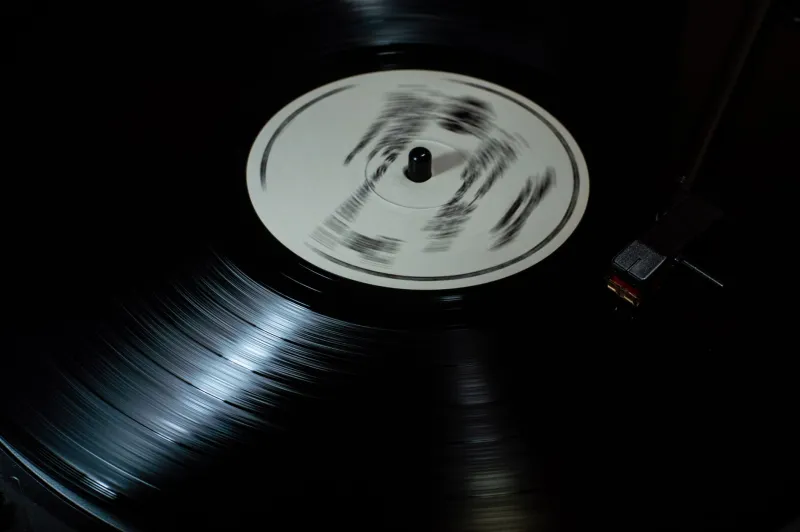
Then there's edge warping, which tends to happen when records are stored vertically but leaning at an angle rather than standing perfectly upright. The outer edge takes the strain and gradually bends. This one is particularly tricky because it can look minor until you put the needle down and watch your tonearm bob like it's riding ocean swells.
Manufacturing defects are another category entirely. Pressing plant errors — whether from the 1970s or from a modern facility cutting corners — can produce records that arrive warped right out of the sleeve. This was especially common during the vinyl glut of the late '70s, when demand outpaced quality control and plants were rushing product out the door. If you've ever cracked open a sealed copy of something only to find a warp inside, you've met this particular ghost.
The Spectrum of Warp: From Annoying to Unplayable
Not every warp is a catastrophe, and this is where collectors need to develop an honest eye. A slight dish warp — where the record curves uniformly and gently — often plays just fine on a well-set-up turntable with a decent tonearm. The stylus tracks through it without drama. You might not even notice it sonically unless you're watching the record spin.
Edge warps and compound warps (the kind that twist in multiple directions) are a different story. These can cause the needle to skip, lose contact with the groove entirely, or in bad cases, stress the cantilever of your cartridge over time. If a record rocks dramatically when you set it flat on a table, you're probably looking at a problem that will affect playback.
The honest collector's rule of thumb: play it first. Don't assume a warp is a dealbreaker before you've actually heard what it does. You might be surprised.
Restoration: The Flatten-or-Forget Decision
If you've decided a warp is worth addressing, you've got a few options — none of them guaranteed, and all of them requiring patience.
The most common DIY method is the sandwich press technique: place the record between two sheets of glass (or two flat, heavy boards) and leave it in a warm environment — not hot, warm — for 24 to 72 hours. Some people use a barely warm oven, others rely on a sunny room or a heating pad set low. The idea is to gently coax the vinyl back toward flat without introducing new stress. Results vary widely depending on the severity of the warp and the age of the record.
Dedicated record flattening devices have come onto the market in recent years, with the Orb Record Flattener from Japan being one of the more respected options among serious collectors. These apply controlled heat and pressure in a way that's more consistent than DIY methods. They're not cheap, but for a collector with a meaningful library of warped records, they can be worth the investment.
What you should never do: rush it. High heat applied quickly will damage the grooves and potentially ruin the record permanently. Vinyl has a memory, and you're trying to gently overwrite it — not shock it into submission.
The Case for Leaving It Alone
Here's where things get philosophical, and where The Drift's perspective on vinyl culture comes into play.
There's a school of thought among collectors — a growing one — that the imperfections in a record are inseparable from its history. A warp tells you something. Maybe this copy of a classic soul album spent thirty years in a garage in Memphis. Maybe it was played constantly at a house party in 1974 and then left on top of a radiator. That warp is a timestamp, a scar from a life actually lived.
Preservation and authenticity are always in tension in this hobby. We want records to sound perfect, but we also want them to be real — to carry the weight of all the hands they've passed through. Sometimes accepting a warp, playing around it, or simply keeping a record in your collection as an artifact rather than a hi-fi source is the most honest thing you can do.
Original pressings of rare records are particularly worth this consideration. A warped first pressing of something genuinely scarce is still a first pressing. Its sonic and historical value doesn't disappear because it leans a little. Many collectors keep warped copies as display pieces or as placeholders while they hunt a cleaner copy — and that's a completely legitimate approach.
What to Do at the Crate
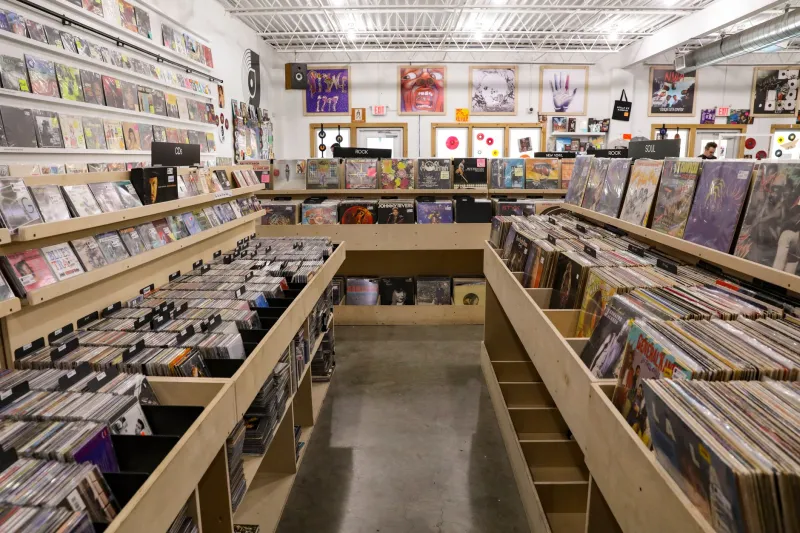
When you're digging and you find a warped record you want, here's a quick field guide: Hold it up at eye level and look across the surface. A gentle uniform curve is usually manageable. Anything that looks like a topographical map of the Rockies is probably a pass unless the record is irreplaceable to you personally.
Always factor in the price. A warped common pressing isn't worth much effort. A warped original pressing of something you've been hunting for years? That's a different conversation entirely.
Vinyl isn't perfect. It never was. It warps, it pops, it crackles, it ages. And that's a big part of why we love it — because it's alive in a way that digital files simply aren't. The warp in your record isn't always a flaw to be corrected. Sometimes it's just the record telling you where it's been.