Rewind: What the Cassette's Unlikely Comeback Actually Tells Us About Collecting
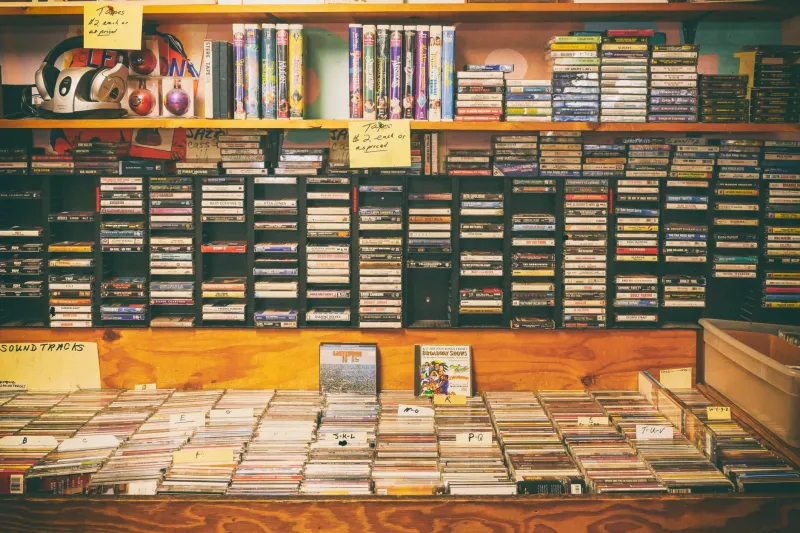
Somewhere in America right now, a teenager is buying a cassette tape of their favorite artist's new album. They probably don't own a tape deck. The cassette might live in a drawer, or on a shelf, or get played exactly once in their parents' old car before the mechanism eats it. And none of that is really the point.
The cassette tape, a format that was supposed to be as dead as the eight-track, is now outselling CDs in the United States. Let that settle for a moment. The format that survived boomboxes, Walkmans, mixtape culture, and the arrival of the CD — before being unceremoniously buried by it — has crawled back out of the discount bin and is moving more units than the format that supposedly replaced it.
For anyone paying attention to physical music culture, this is not just a quirky footnote. It's a signal.
The Numbers Aren't Lying
The Recording Industry Association of America has been tracking the cassette's resurgence for several years now, and the trajectory is consistent. Sales have grown year over year through most of the 2020s, driven largely by artist-specific releases from major acts — Taylor Swift, Harry Styles, and a growing roster of indie artists who've recognized the format's appeal to a specific kind of fan.
The CD, meanwhile, has continued its slow structural decline. It still exists, still sells, still finds its audience among older demographics and certain niche communities. But as a cultural object with energy around it, it's been running on fumes for a while. The cassette, improbably, has more momentum.
This isn't about audio quality. Nobody is arguing that cassette tapes sound better than anything. The format has real sonic limitations — tape hiss, frequency roll-off, the occasional mechanical drama — and the people buying cassettes in 2024 are largely aware of this. They're not buying them for fidelity.
What They're Actually Buying
The cassette revival is, at its core, a story about physical connection in a streaming world. And that's a story vinyl collectors should find immediately familiar.
When someone buys a cassette of an album they love, they're buying an artifact. They're buying something that exists in three dimensions, that has a physical relationship to the music it contains, that requires some kind of intentional act to engage with. Even if the tape never gets played, it represents a different kind of ownership than a streaming license or a digital download.
This is exactly the psychology that drove vinyl's revival — and it's the same psychology that continues to sustain it. The desire for physical music isn't really about the format. It's about the relationship between the listener and the music, and the role that objects play in making that relationship feel real and lasting.
Cassettes, it turns out, scratch that itch at a lower price point. A cassette release typically retails for significantly less than a vinyl pressing, making it accessible to fans who want something physical without the investment that a quality turntable setup requires.
The Collector Psychology Angle
Here's where it gets interesting for the vinyl world specifically: the cassette revival isn't being driven by audiophiles. It's being driven by fans. And that distinction matters.
Vinyl collecting has always had a dual audience — the fidelity-focused listener who cares deeply about pressing quality and mastering, and the fan-collector who wants a physical connection to the music they love. These two groups coexist in the culture, sometimes uncomfortably, and their different priorities shape everything from what labels press to what collectors are willing to pay.
Cassettes have essentially become the fan-collector format. They're cheap enough to buy on impulse, small enough to accumulate without infrastructure, and visual enough — with their J-card artwork and often elaborate packaging — to function as display objects. They're also nostalgic in a way that resonates differently depending on your age: as genuine memory for older listeners, as retro aesthetic for younger ones.
What's notable is that this isn't cannibalizing vinyl. The two formats appear to be serving genuinely different needs, with meaningful overlap in the collector community but not much direct competition.
Should Vinyl Collectors Care?
In a practical sense, probably not too much. Your turntable isn't going anywhere, and the vinyl market — while not without its challenges — remains structurally healthy. The cassette revival doesn't threaten wax.
But there's a broader lesson here that's worth sitting with. The persistence of physical formats — all of them, including the ones that have no business being alive by any rational market logic — tells us something important about what people actually want from music.
They want to hold it. They want to choose it deliberately. They want it to take up space in their lives in a way that a playlist simply cannot. The specific format is almost secondary to that fundamental desire.
For record shops and vinyl culture more broadly, the cassette's comeback is actually good news. Every teenager who buys a Taylor Swift cassette because they wanted something physical is a potential future vinyl convert. They've already demonstrated that they care about the object. Getting them to care about the sound of the object is the next step — and that's a conversation the vinyl world is well-positioned to have.
The Drift Takeaway
Formats don't really die because the technology becomes obsolete. They die when the emotional relationship people have with them runs out. CDs are struggling because that relationship largely evaporated. Vinyl thrives because it never did. And cassettes are back because, for a new generation, a relationship is just beginning.
Pay attention to that. The formats that survive aren't always the ones that sound best. They're the ones that mean something.