Made in America: The Quiet Renaissance of Domestic Vinyl Pressing and What It Means for Your Turntable
The Supply Chain Problem Nobody Saw Coming
If you bought a new record in 2021 and waited four months for it to arrive, you already understand the crisis that quietly reshaped the vinyl industry. When demand for records surged during the pandemic — and surged is an understatement, with vinyl outselling CDs for the first time since the 1980s — the global pressing infrastructure simply couldn't keep up.
The bottleneck was severe. Most of the world's vinyl pressing capacity was concentrated in a handful of plants in Europe and a few facilities in the US that had been operating well below the industry's actual needs for years. Lead times stretched from weeks to months. Labels delayed releases. Collectors waited. And somewhere in all that frustration, a question started getting asked with real urgency: why doesn't America press more of its own records?
The answer, it turns out, was in motion before anyone was asking the question. And the results are starting to show up in your local shop.
A Brief History of the Decline (and Why It Matters)
At its peak in the late 1970s, the United States had dozens of pressing plants operating across the country. The major labels owned many of them outright. When CD sales began cannibalizing vinyl in the mid-eighties, those plants closed one by one. Equipment was sold for scrap. Expertise walked out the door. By the late nineties, domestic pressing capacity had shrunk to almost nothing.
The vinyl revival that began around 2007 and accelerated through the 2010s caught the industry genuinely unprepared. The surviving US plants — United Record Pressing in Nashville and a small number of others — were running at capacity. The rest of the demand was absorbed by facilities in the Czech Republic, Germany, and the Netherlands.
Overseas pressing isn't inherently inferior. Some of Europe's plants produce exceptional work. But the logistical dependency created real problems: longer lead times, higher shipping costs, less quality control visibility for domestic labels, and a fragility in the supply chain that the pandemic exposed completely.
The New Plants
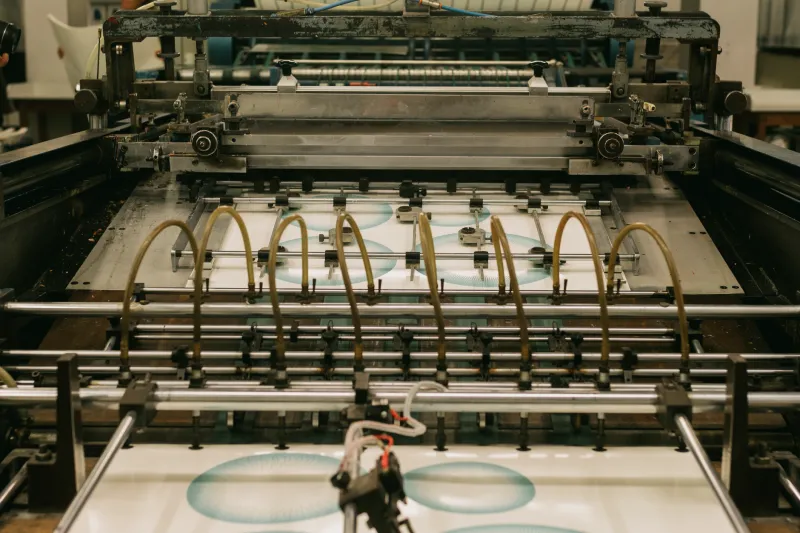
Since 2019, a significant number of new pressing facilities have either opened or expanded in the United States. The list includes Gotta Groove Records in Cleveland, Furnace Record Pressing in Alexandria, Virginia, Pirates Press Records in San Francisco, and several newer operations that have come online more recently.
Each facility has its own character. Some specialize in short-run indie releases. Others are chasing major-label volume. A few are positioning themselves explicitly around quality — smaller batch sizes, tighter tolerances, more hands-on quality control.
"The conversation has completely shifted," says one mastering engineer who works with multiple US plants and asked not to be named because of ongoing label relationships. "Three years ago, everyone was just trying to get records pressed at all. Now the conversation is about quality. Plants are competing on what they can deliver sonically, not just on turnaround time."
That competitive pressure is producing results that audiophiles are noticing.
What the Engineers Are Saying
The technical differences between a well-pressed domestic record and a well-pressed overseas record are, in the view of most engineers, minimal when both facilities are operating at their best. The variables that actually drive quality — the quality of the lacquer, the care taken during mastering, the vinyl compound used, the temperature and pressure consistency during pressing — are controllable on either continent.
Where domestic pressing has a structural advantage is in communication and iteration.
"When you're working with a plant that's six time zones away, getting a test pressing back and having a real conversation about what you're hearing is genuinely difficult," explains one independent label owner who switched to a domestic plant for her last two releases. "With a plant in the same country, I can actually talk to the people doing the work. That feedback loop changes everything."
Several engineers we spoke with pointed to vinyl compound as the variable most worth watching. The PVC compounds used in vinyl pressing have evolved significantly, and domestic plants are increasingly sourcing high-quality compounds that compare favorably with what the best European facilities use. The era of thin, noisy, surface-crackle-prone records that characterized some of the early vinyl revival era is, most agree, largely behind us.
The Audiophile Concerns
Not everyone is fully convinced. Among serious collectors and audiophiles, there remains a persistent belief — sometimes backed by measurable evidence, sometimes by mythology — that vintage pressings from specific plants and eras represent a quality ceiling that modern records can't reach.
The argument usually centers on lacquer and plating. Original master lacquers, cut from analog tape, and plated at facilities that no longer exist, have a character that modern digital-to-lacquer transfers can't fully replicate. That's a real technical distinction, and it's not wrong.
But it's also somewhat beside the point when evaluating what today's domestic plants are producing. The relevant comparison isn't a 1975 Blue Note pressing versus a 2024 reissue. It's a 2024 domestic pressing versus a 2024 overseas pressing — and on that comparison, the gap has narrowed considerably.
"I've heard domestic pressings in the last two years that I would have assumed were European without looking at the label," says one collector who has been buying records for over thirty years and runs a small review blog out of Chicago. "The quality ceiling has risen. That's just true."
What It Means for Your Collection
For collectors building a vinyl library in 2024 and beyond, the domestic pressing renaissance has practical implications.
First, availability is genuinely improving. More pressing capacity means shorter wait times, fewer sold-out situations, and a better chance that the record you want actually exists in a physical form you can buy.
Second, quality is more consistent than it's been in years. The plants that are competing for audiophile-focused business are investing in equipment, staff training, and quality control in ways that show up in the groove.
Third, and maybe most importantly for independent music fans: smaller labels can now press records domestically at run sizes that were previously uneconomical. That means more music from more artists making it to vinyl — which is, ultimately, what this whole thing is supposed to be about.
The Drift Takeaway
The story of American vinyl pressing is still being written. Some of the newer plants will thrive. Some won't survive the inevitable market corrections. But the direction is clear: domestic pressing is back, it's serious, and it's producing records worth owning.
Next time you're flipping through new releases at the shop, check the label. More and more often, you'll find those two words that used to be rare: Pressed in the USA. It means something again.