No List, No Problem: What Aimless Crate Digging Actually Does to Your Ears
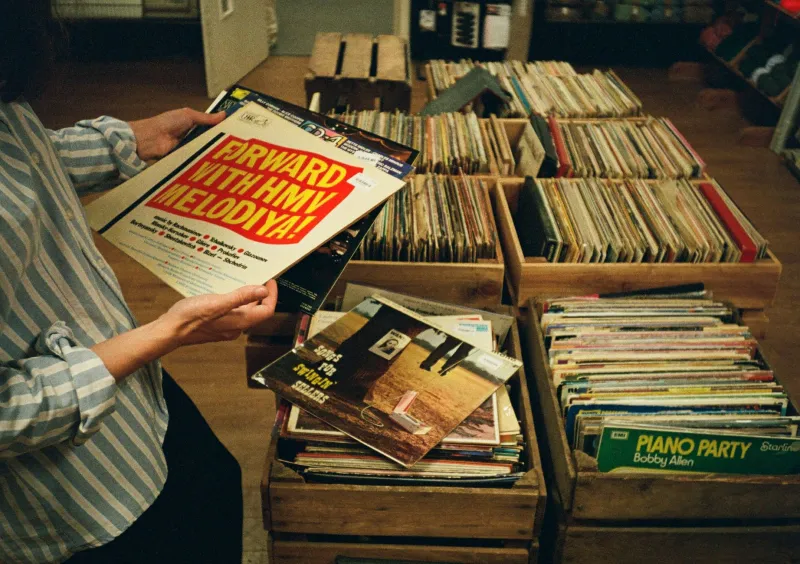
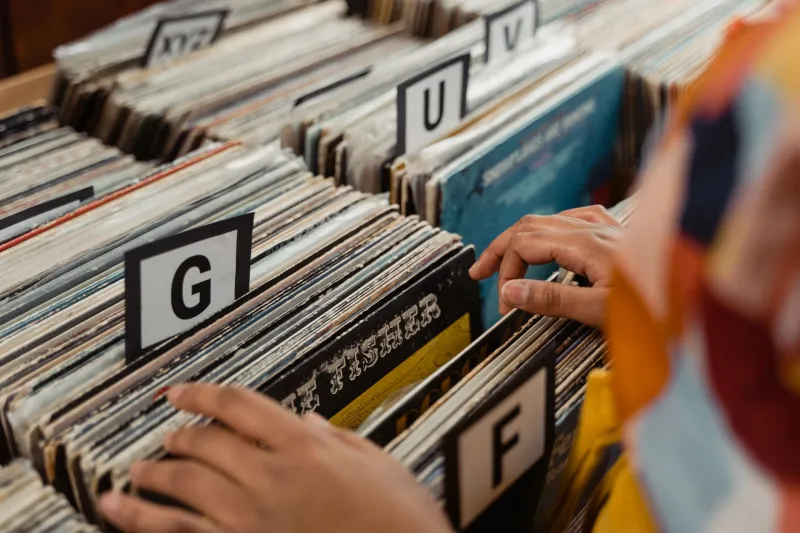
Most people walk into a record store with a mission. There's a title they've been chasing, a reissue they read about, a gap in the collection that needs filling. That's fine. That's normal. But there's another kind of visit — the kind where you show up with empty hands and no agenda — and that version tends to change you in ways a wish list never could.
This is what we mean when we talk about drift. Not laziness. Not aimlessness for its own sake. It's a deliberate surrender to the room, to the bins, to whatever happens to be sitting between two records you've already heard a hundred times. And the collectors who do it regularly will tell you: your ears get sharper for it.
The Moment Your Eyes Stop Doing All the Work
Here's what usually happens when you're hunting with a list. You're scanning for titles. You're reading spines. You're filtering by what you already know you want, which means you're filtering out nearly everything else. The visual brain takes over, and the listening brain — the one that actually makes you love music — goes quiet.
When you drift, that dynamic flips.
Without a target, you start responding to other signals. The weight of a record in your hand. The texture of a gatefold cover that's been handled by a hundred people before you. The way a particular pressing feels slightly denser than the reissue sitting right next to it. You start clocking these things without consciously deciding to, because your brain has nothing else to latch onto.
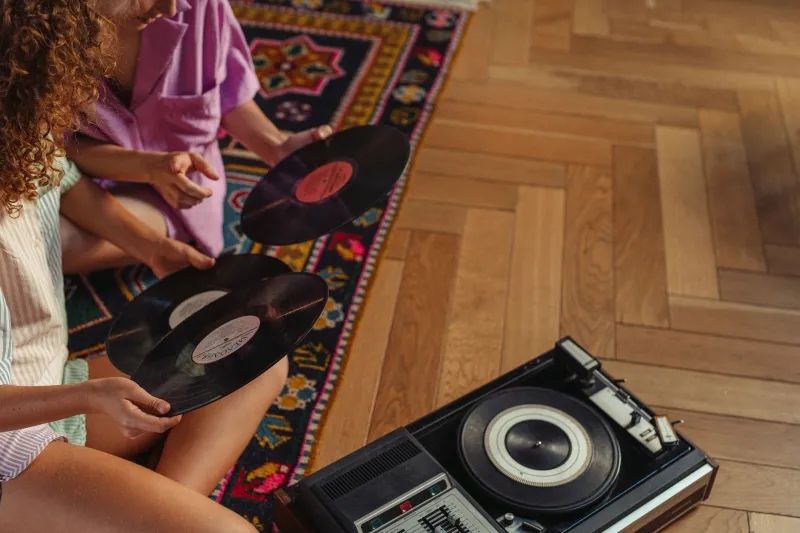
That tactile engagement is doing more than it looks like. It's training you to associate physical qualities — the heft of an original pressing, the sharpness of a well-maintained sleeve — with the sonic experience waiting inside. Over time, experienced diggers develop an almost instinctive read on whether a record is going to sound good before they've even looked at the label. That's not magic. That's repetition through drift.
Album Art as a Listening Cue (When You Let It Be)
There's a version of jacket art appreciation that's purely aesthetic — you like the design, you appreciate the photography, you note the era. That's all valid. But when you're drifting, album art starts functioning differently. It becomes a kind of pre-listening.
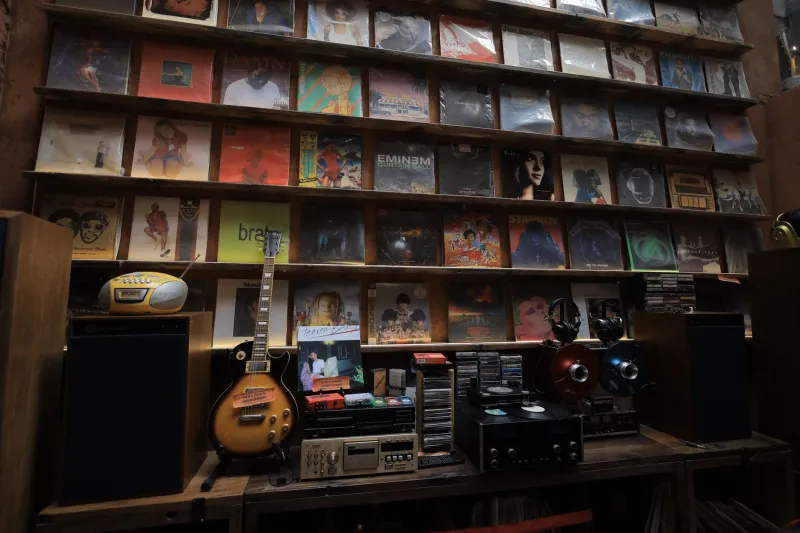
You flip a record you've never heard of. The cover is stark, minimal, a little unsettling. Or it's warm and chaotic and clearly made by someone who cared deeply about every square inch. Those aren't just visual choices — they're emotional ones, and they often map directly to what's in the grooves. Drifters learn to read that language. They develop a feel for which visual cues correlate with which sonic territories, and that intuition becomes its own curation tool.
This is something no algorithm can replicate. Spotify's recommendation engine can tell you that people who listened to one record also listened to another, but it can't teach you to feel the difference between a cover that's trying too hard and one that knows exactly what it is. That discernment only comes from hours in the bins.
Why Reputation Is the Enemy of a Good Ear
Here's the uncomfortable truth: knowing too much about a record before you hear it can actively get in the way of hearing it clearly.
When you track down a highly-rated album from a pre-built list, you arrive at it pre-loaded with expectation. Critics loved it. The internet agrees it's essential. Your collector friends have been talking about it for years. By the time the needle drops, you're not really listening — you're confirming. You're looking for the thing you were told to hear.
Drift strips that scaffolding away. When you pull a record you've never encountered, from a genre you only half-know, on a label you can't quite place, you have nothing to confirm. You just have the music. And that's when you find out what your ears actually think, independent of what anyone else has told them to think.
Some of those discoveries won't land. You'll put it back after thirty seconds and move on. But the ones that do land — the ones that stop you cold in the middle of a crowded shop on a Saturday afternoon — those hit differently than anything a curated playlist ever handed you. Because you found it. Your ears found it, without any help.
The Palate Gets Built in the Gaps
There's a concept in food culture about developing a palate through exposure — eating widely, eating without prejudice, learning to identify flavors you didn't have words for before you tasted them. Vinyl collecting works the same way, and drift is how you get that exposure.
Every unfamiliar record you pull from a bin is a data point. Even the ones you immediately put back. Especially those. You're building an internal library of sonic reference points — what a particular era of jazz recording sounds like, how a certain pressing plant's output differs from another's, what a record sounds like when it was made by people who were genuinely breaking new ground versus people who were chasing a trend. None of that gets built by following a list. It gets built in the gaps between the records you were looking for.
Regular drifters often describe a moment — usually a few years into serious collecting — when they realize they've developed opinions they can't fully explain. They'll pick up a record, look at the matrix number in the dead wax, and just know. Or they'll hear thirty seconds at a listening station and be able to place the approximate year and pressing origin without checking. That's not showing off. That's what a developed palate sounds like.
Give Yourself Permission to Wander
If you've never walked into a record store without a plan, try it. Leave the want list at home — or at least in your pocket, unopened. Give yourself an hour and no objective except to flip through whatever catches your eye. Pick up records based on feel. Read the liner notes on things you've never heard of. Let yourself be surprised by a genre you assumed wasn't for you.
The worst thing that happens is you leave without buying anything. The best thing that happens is you walk out with a record that rewires something in how you listen — and a slightly sharper set of ears than the ones you came in with.
That's the drift. That's what it's for.