Crate Logic: How the Calendar Quietly Curates Your Collection for You
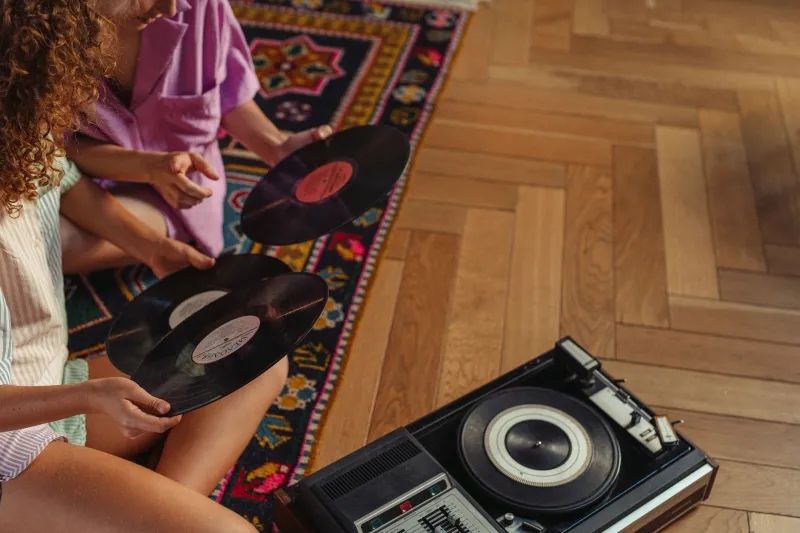
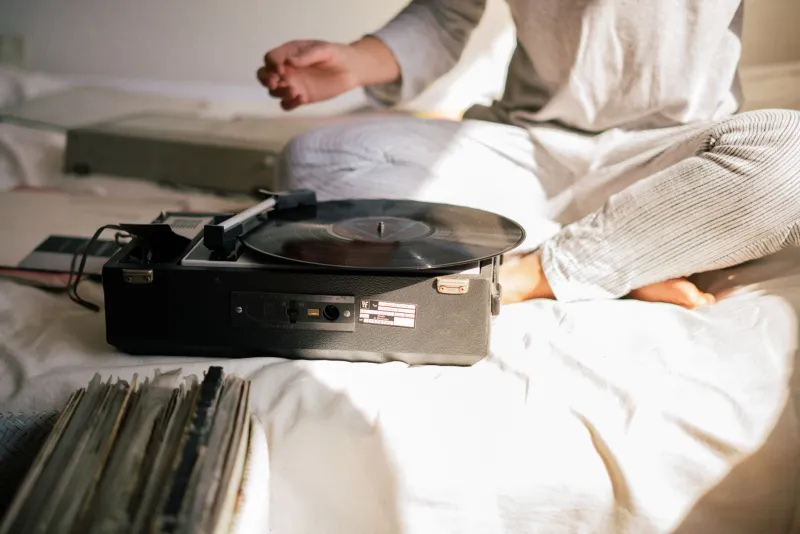
Somewhere around mid-October, without really thinking about it, you stop putting on the breezy funk records that got you through August. The upbeat, sweat-soaked stuff slides to the back of the shelf. Something darker, more textured, starts finding its way to the platter. Maybe it's a Coltrane record you hadn't touched since March. Maybe it's that worn copy of Nick Drake's Pink Moon you picked up at a Nashville shop two winters ago. It just feels right — and you can't fully explain why.
That's the drift. And if you've been collecting vinyl for any real length of time, you already know exactly what we're talking about.
The Seasonal Pull Is Real — And It's Not Random
There's actual psychology behind what happens when your listening instincts shift with the weather. Researchers who study mood and music consumption have consistently found that people gravitate toward music that mirrors or amplifies their emotional state — a phenomenon sometimes called "mood congruence." In winter, when daylight shrinks and routines contract, listeners tend to seek out music that feels introspective, slower, more enveloping. In summer, the appetite flips: uptempo, rhythmically driven, socially oriented music rises to the top of the stack.
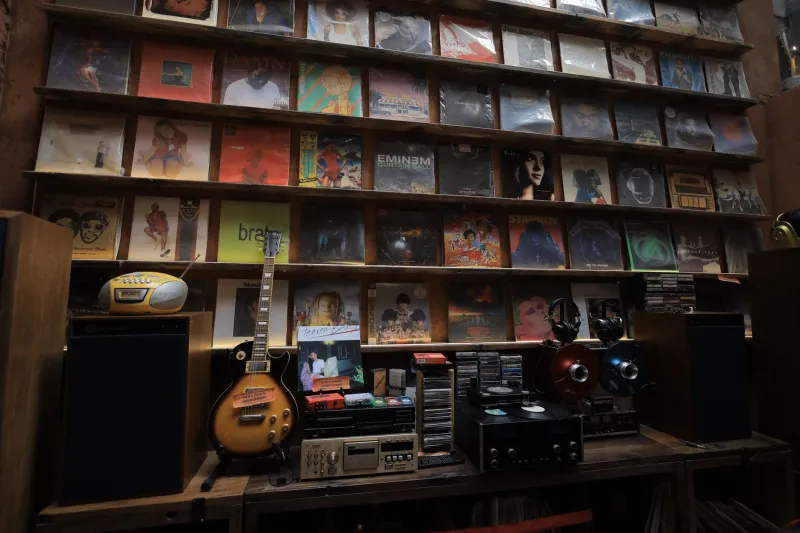
But for vinyl collectors, this isn't just a passive thing that happens to you. It's built into the ritual. You're physically flipping through a crate, running your fingers across spines, pulling something out to examine the sleeve. That tactile process gives your subconscious room to operate. You're not scrolling an algorithm — you're browsing your own accumulated instincts. The record you reach for on a gray Tuesday in February is a kind of self-portrait.
Winter: The Deep Listening Season
Ask most serious collectors and they'll tell you: winter is when they do their best listening. The house is quieter. There's nowhere urgent to be. The combination of cold air and early darkness creates a kind of permission to sit still and actually hear something front to back.
This is when the long-form stuff comes out. The double LPs. The jazz records that require patience — the ones where a side can run twenty minutes without a single moment you'd want to skip. ECM Records, with its vast catalog of spacious, contemplative music, basically exists for February nights in the Midwest. So does a certain strain of American folk — the kind that sounds like it was recorded in a cabin somewhere off a dirt road in Vermont.
If you've been building a collection with any intention at all, winter is when you discover what you actually bought. The impulse purchases, the recommendations you followed on faith — they get their real auditions when the snow's coming down and you've got nowhere else to be.
Spring and the Re-Discovery Itch
Something loosens up when the weather breaks. The collection that felt complete and settled in January suddenly looks full of gaps. This is when collectors tend to go hunting. Record Store Day falls in April for a reason — it lands right when people are shaking off winter inertia and feeling the urge to bring something new home.
Spring listening tends to be more eclectic, more restless. You're in a transitional mood, so you reach for transitional music: records that sit between genres, artists who were themselves in the middle of something when they made a particular album. The Velvet Underground's Loaded, Joni Mitchell's Court and Spark, Stevie Wonder's Talking Book — records that feel like they're moving somewhere, like the season itself.
This is also prime time for rediscovery. That stack of records you haven't touched in six months? Pull it out. Spring has a way of making familiar music sound different — not better or worse, just new again.
Summer: Vinyl at the Edges
Summer is actually one of the trickier seasons for serious vinyl listening. The heat is a real enemy — records left in a hot car or near a sunny window warp faster than you'd think. But beyond the practical concerns, summer listening habits tend to scatter. Life gets louder and more social. You're not always sitting in front of the turntable; you're in the backyard, at a cookout, on a road trip.
What survives in summer rotation are the records that work at volume, in company, without demanding total attention. Soul compilations. Classic rock that doesn't need an explanation. Latin records that make a room move. This isn't lesser listening — it's contextually smart listening. Music has always been a social technology, and summer is when that function gets exercised.
For collectors, summer is often a good time to explore the stuff you've been avoiding because it felt too easy, too crowd-pleasing. There's no shame in a record that makes people happy in a room. Some of the best-pressed, best-sounding vinyl ever made was designed to do exactly that.
Fall: The Collector's Sweet Spot
If spring is when you go hunting and winter is when you go deep, fall is when the two impulses combine into something close to ideal. The temperatures are back in a range where you actually want to be inside. The urgency of summer has settled. And there's something about the particular quality of autumn light — late afternoon gold, early dark — that makes pulling records feel ceremonial.
Fall is when a lot of collectors say they find their most meaningful discoveries. The pace of life has a natural rhythm to it, and that rhythm syncs up well with the act of sitting down with something unfamiliar and giving it a real chance. This is the season for the record you bought six months ago and never quite got around to. The reissue that got good reviews but you weren't ready for. The jazz vocal album someone pressed into your hands at a shop in Chicago.
Stop Fighting the Drift — Use It
The instinct a lot of collectors have is to resist this kind of seasonal rotation. There's a completionist impulse that says every record deserves equal time, every corner of the collection should be visited with equal frequency. That's a noble idea, but it's also a fast track to treating your vinyl like an obligation rather than a pleasure.
The drift isn't a failure of discipline. It's your listening intelligence at work. When you reach for something that fits where you actually are — emotionally, seasonally, rhythmically — you're not taking the easy way out. You're honoring what music is actually for.
A collection that gets rotated by mood and season is a living thing. The records you haven't touched in months are waiting, not wasted. And when you finally pull one back out at exactly the right moment — when the temperature and the light and whatever's going on in your life all line up with what that record is doing — you'll remember why you started collecting in the first place.
That's the whole point of the drift. You don't choose it. You just learn to follow it.