Spinning Local: How Independent Record Shops Are Quietly Reshaping Vinyl Culture Across America
More Than Just a Store
Walk into the right record shop on a Saturday afternoon and you'll find something you weren't expecting: a teenager flipping through a jazz bin next to a retired schoolteacher, a couple debating the merits of original pressings versus reissues, a barista from next door who wandered in on her break and hasn't left in forty minutes. Nobody planned this. Nobody had to.
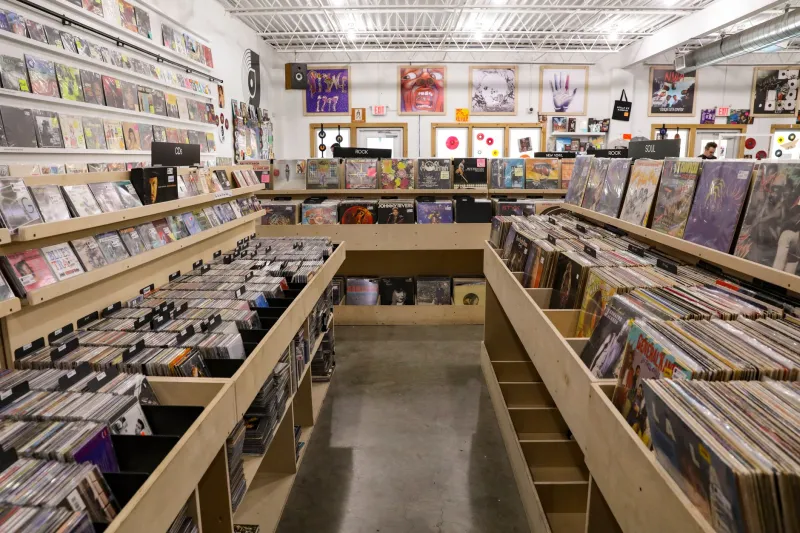
That's the quiet magic happening inside independent record shops right now, and it's happening all over the United States. From a converted auto garage in Tucson to a narrow storefront wedged between a barbershop and a taqueria in Minneapolis, these spaces are doing something that streaming platforms can't replicate with an algorithm: they're building real, breathing communities around the act of listening.
We spent time talking to shop owners, regulars, and first-time buyers across the country to understand how this shift is happening — and why the independent record shop has become one of the most unlikely cultural institutions of the decade.
The Curation Factor
Ask any serious collector what separates a great record shop from a mediocre one and they'll give you the same one-word answer: curation.
"Anyone can have records," says Marcus Webb, who runs Turnstile Audio in Nashville, Tennessee. "What takes years to develop is the eye — knowing what to pull from an estate sale, what to feature in the front window, what to hide in the back for the right customer. That's what keeps people coming back."
Webb opened Turnstile in 2018 after a decade of buying and selling records out of his truck at flea markets. His shop now carries around 12,000 records, organized by feel as much as by genre. The soul and funk section bleeds into African rhythms. The folk section drifts toward singer-songwriter and then quietly into ambient. The layout is intentional. He wants people to wander.
"Discovery is the whole point," he says. "If you come in looking for one thing and leave with three other things you didn't know you needed, I did my job."
This philosophy — call it guided wandering — is becoming the defining characteristic of the best independent shops. Unlike big-box retailers, which stock records based on sales data and label relationships, independent shops reflect the personalities and obsessions of their owners. That specificity is exactly what draws collectors in.
Building the Scene, One Listen at a Time
In Portland, Oregon, a shop called Side One has been hosting in-store listening sessions every Thursday evening for the past three years. The concept is simple: the owner picks a record, drops the needle, and everyone in the shop listens together — no phones, no side conversations. Just the music.
"The first few times we did it, people thought it was weird," admits owner Dana Cho. "We're so used to music being background noise. Making it the main event felt almost radical."
Now those Thursday nights regularly draw twenty to thirty people, some of whom don't even buy anything. They just come to listen. Cho says that's completely fine with her.
"Not every visit has to end in a sale. If someone comes in, has a meaningful experience with music, and leaves feeling something — that's worth more than a transaction. They'll be back."
This kind of event programming is becoming standard practice for forward-thinking shops. Record release parties, artist Q&As, "blind listening" nights where customers guess the genre or artist — the formats vary, but the goal is the same: turn the shop into a destination rather than just a stop.
The Next Generation Is Already Here
One of the more surprising findings from our conversations was just how young many new vinyl buyers are. The average age of a first-time record buyer has dropped noticeably over the past five years, and shop owners across the country are noticing.
"I've got kids coming in who are seventeen, eighteen years old, and they are serious," says Ray Delgado, who operates Groove Meridian in San Antonio. "They've done their research. They know what an original pressing is. They know what to look for on the label. They're not casual about it."
Delgado credits social media — particularly short-form video platforms — for sparking initial curiosity, but says the shops are where that curiosity gets converted into genuine passion.
"They see a video online and think, 'Oh, vinyl looks cool.' Then they come in, they hold a record, they hear it on a good turntable, and something clicks. That's a different kind of education than anything on a screen."
Many shops have responded by creating intentional entry points for newer buyers — starter turntable recommendations, beginner-friendly sections, and staff who are trained to be welcoming rather than intimidating. The old stereotype of the condescending record store clerk is, at least in the best shops, a relic.
The Prized Acquisitions
Every shop has a story about the one that almost got away — or the one that didn't.
Marcus Webb at Turnstile still talks about the day he bought out a collection from an elderly jazz musician's estate and found an original Blue Note pressing of John Coltrane's Blue Train in near-mint condition, still in its original sleeve.
"I sat with that record for a week before I put it out," he admits. "I probably played it ten times in the back room. There are moments in this job that remind you why you got into it."
Those kinds of finds — the ones that carry history, that have been somewhere and heard things — are part of what keeps the vinyl world spinning. And independent shops, with their deep roots in local communities and their networks of collectors and estate sale contacts, are uniquely positioned to surface them.
Why It All Still Matters
In an era when any song ever recorded is technically available on a phone in your pocket, the fact that record shops are not just surviving but genuinely thriving says something interesting about what people are actually hungry for.
Convenience is everywhere. What's rare is context — a place where music has weight, where choices are made with intention, where you might walk in for one record and end up in a conversation that changes the way you hear everything.
That's what the best independent shops are offering. Not just records. A reason to show up.
And from what we've seen, people are showing up in bigger numbers every year.